

Visiting Glacier National Park sits near the top of most any Montana bucket list – and rightfully so. With its namesake glaciers, jagged mountain peaks, and clear alpine lakes, the park’s scenery is unmatched. Glacier’s also incredibly diverse (and huge!) with a wide variety of activities on offer, making it an outdoor lover’s paradise.
I can’t deny that it’s very touristy and gets extremely crowded during the summer, but don’t let that put you off too much. Visit during the off-season if you can or go to less popular areas of the park – and know that, well, there’s a reason this national park is so popular.
Whether you’re planning an upcoming trip to the park, daydreaming about taking one someday, or just curious about one of the country’s most stunning natural wonders, these useful and fun facts about Glacier National Park will inform and inspire you.
Table of Contents
Basic Facts about Glacier National Park
From the basics of its location and status to important moments in Glacier National Park history, these are some of the top things to know about the park
1. Glacier National Park is located in northwest Montana.
The closest town sizable town is Whitefish, MT, about 40 minutes from the park’s West Glacier entrance. The population of Whitefish is only around 8,000 people, but it’s got tons to offer – including an impressive arts and dining scene to complement any visit to the park.

Glacier Park borders the Canadian provinces of British Columbia and Alberta, including Waterton Lakes National Park in Canada, as well as the Blackfeet Reservation. Contrary to an apparently common belief, the park does not border the Flathead Reservation, which is over an hour away. (Where did this belief come from? I don’t know!)
2. The park covers more than 1 million acres – or around 1,580 square miles.
That makes it about the same size as Rhode Island!

3. It was named a national park in 1910.
Glacier was the eighth national park in the U.S., designated under President William Howard Taft. It took two decades of advocacy, led by anthropologist and conservationist George Bird Grinnell, to convince Congress to establish Glacier as a national park.
4. The park had 80 glaciers when it opened.
That’s significant because now, just over a century later, it has only 26.
5. The land that now comprises Glacier previously belonged to the Blackfeet tribe.
All visitors should understand the history of Glacier National Park as it relates to the area’s Indigenous people. The Blackfeet tribe sold the land, the western portion of their reservation, to the federal government in 1895 under an agreement that gave them rights to continue using the land.

The catch? Those rights would only exist as long as the land was “public.” When Glacier was designated a national park, the land was no longer considered “public,” and the government revoked the tribe’s rights to use it.
6. Other Native American tribes have also called this land home.
In addition to the Blackfeet tribe, the Salish, Kootenai, and Pend d’Oreille tribes have also historically lived on the land that’s now Glacier Park. Many tribal members believe that the spirits of their ancestors still inhabit this land.
7. People have lived on the land that’s now Glacier Park for around 10,000 years.
Compare that to the mere 110 years Glacier’s been a national park!
8. The park’s nickname is the Crown of the Continent.
It has also been called America’s Switzerland, thanks to the jagged mountain peaks that (somewhat) resemble the Alps.
9. Its symbol is the mountain goat.
If you’re lucky, you might spot one from the trail!

10. Going-to-the-Sun Road is one of Glacier Park’s preeminent attractions.
Going-to-the-Sun Road is the only road that goes across the park, cutting through it for 50 winding miles. The drive offers expansive views of the park’s most stunning scenery and access to many of its campgrounds and trailheads, as well as the three visitor centers. Not only a must-see in Glacier National Park, Going-to-the-Sun is considered one of the best scenic drives in the country.
11. The park has a long-running Native American speakers program.
Through a program called Native America Speaks, the park hosts presentations by members of the Blackfeet, Salish, Kootenai, and Pend d’Oreille tribes. Speakers talk about their tribe’s history, culture, and relationship with the land that’s now Glacier, and there are occasional dance and musical performances.

12. Glacier gets over 3 million visitors per year.
That’s roughly three times the population of the whole state of Montana!
13. The park suffers from devastating wildfires.
Fires burn through the park every summer (and sometimes during other seasons), with each year now more severe than the last. Fires in recent years have destroyed homes, historic cabins, and the 100-year-old Sperry Chalet (which has fortunately since been reconstructed).
14. In addition to being a national park, Glacier is also:
- A UNESCO Biosphere Reserve
- An International Dark Sky Park
- Part of Waterton-Glacier International Peace Park (the world’s first)
- Part of a UNESCO World Heritage Site
- Home to six National Historic Landmarks
The Features of Glacier National Park
What is Glacier National Park known for? Its glaciers, of course – but also so, so much more. These interesting facts about Glacier National Park cover all of the park’s most amazing natural features.
15. Glacier National Park is home to:
- 26 glaciers
- 175 mountains
- 762 lakes
- 200 waterfalls
- 563 streams (over 2,865 miles of streams!)
16. The biggest glacier in the park is Harrison Glacier.
It currently covers over half a square mile of land – but, like all of the glaciers in the park, it’s rapidly shrinking.
17. The largest lake is Lake McDonald.
This massive body of water on the western side of the park is 9.4 miles long and 1.5 miles wide – and 464 feet deep.

18. The highest point in Glacier Park is the summit of Mt. Cleveland.
The peak of the park’s highest mountain reaches nearly 10,550 feet. But it’s not even in the top 100 highest mountains in Montana!
19. The park also has a huge variety of plant and wildlife:
- 71 different mammals
- 276 kinds of birds
- 24 fish species
- 1,990 types of plants
20. The most famous animals in Glacier National Park include:
- Bears
- Bighorn sheep
- Elk
- Mountain goats
More Fun Facts about Glacier National Park
We’ve covered the basics, but there’s always more to learn. Here are even more interesting tidbits and fun facts about Glacier National Park.
21. The Aurora Borealis is sometimes visible in the park.
Don’t set your heart on seeing the Northern Lights in Glacier National Park, but if you’re lucky, they can occasionally be spotted (typically not in the summer months).
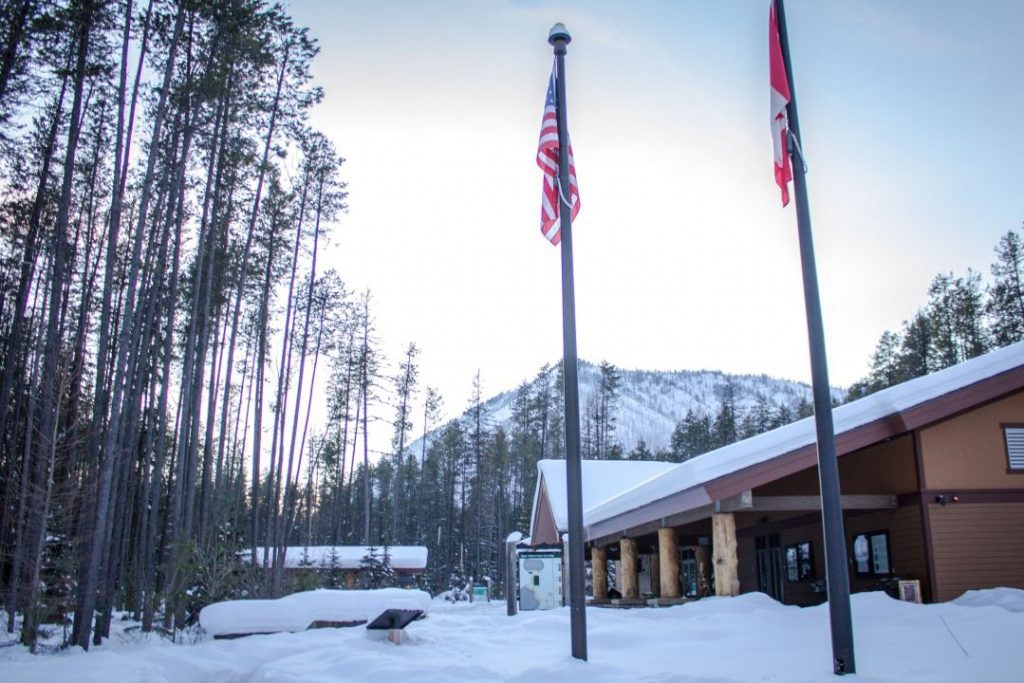
22. The park gets around 160 inches of snowfall annually.
That’s over 13 feet of snow – but honestly, it’s not a ton by Montana standards!
23. There are a whopping 158 hiking trails in the park.
Altogether, they add up to nearly 750 miles of trails. Believe it or not, there are people who’ve hiked every mile of trail in the park. (I am not one of them.)
24. It took 14 years to build Going-to-the-Sun Road.
The park’s iconic road was under construction from 1919 all the way until 1933 – and even then, it wasn’t fully paved until 1952. I’d say it’s earned its status as a National Historic Civil Engineering Landmark!
25. Glacier is the only national park that’s fully in Montana.
Montana also has a small sliver of Yellowstone National Park (although local kids definitely grow up believing that, like, at least half of Yellowstone is in Montana!). There are, however, some other types of National Park Services units in Montana, including the Little Bighorn Battlefield (a national monument) and Grant-Kohrs Ranch (a national historic site).
26. The park straddles the Continental Divide.
The Continental Divide runs from Alaska to Mexico, and goes straight through Glacier Park on its way. Going-to-the-Sun Road crosses the Continental Divide at Logan Pass, where the elevation is 6,646 feet.

27. It contains 110 miles of the Continental Divide Trail.
The Continental Divide makes up the route of the U.S.’s third most prominent thru-hike, the Continental Divide Trail. The trail enters the south side of Glacier Park at Marias Pass and heads northeast through the park, going past Two Medicine, over Triple Divide Peak, past Many Glacier, along the Highline Trail, into Goat Haunt, and eventually to the Canadian border.
28. There are over 1,000 frontcountry campsites at Glacier National Park.
And that doesn’teven include the backcountry campgrounds!
29. Scenes of Glacier Park appear in several popular movies.
Most notably, portions of The Shining, Forrest Gump, and The Lion, The Witch, and the Wardrobe were filmed in the park.

30. There’s a famous Robin Williams quote about Glacier Park.
There are lots of inspiring quotes about Montana, and Glacier is no exception. Robin Williams said of the park, “If it isn’t God’s backyard, He certainly lives nearby.”
31. Not everyone loves Glacier.
Really, the worst thing I could say about visiting Glacier National Park is that it’s crowded and the weather is sometimes not great. But many visitors have far more negative things to say. Here are a few of my favorite one-star reviews of the park:
- “Most of the park not covered by glacier”
- “The glaciers are too cold when you touch them”
- “You have to walk up hill, everywhere”
- “Too many waterfalls”
So if you want glaciers to be warm (?) or you don’t like waterfalls (??), you should stay at home!
Visitor Information about Glacier National Park
If you’re planning a trip to Glacier National Park, these are the things to know before you go.
32. Admission to the park is $35.
The $35 fee includes one vehicle and is good for seven days. During the winter, the fee drops to $25. Like all U.S. national parks, admission to Glacier is also covered by the $80 “America the Beautiful” annual pass.
33. There are seven entrances to the park.
By far the busiest entrances are the West Glacier entrance (known as the West entrance) on the (duh) west side of the park and the Saint Mary entrance on the east side. The Many Glacier and Two Medicine entrances, both on the east side of the park, are also commonly used.
More remote are the Camas Creek and Polebridge entrances on the west side and the Cut Bank entrance on the east side (has anybody even heard of that one?). Visitors planning to drive Going-to-the-Sun Road typically enter through either the West Glacier or Saint Mary entrances.
34. The park has three visitor centers.
All three visitor centers are found along Going-to-the-Sun Road:
- St. Mary Visitor Center, near the East entrance
- Apgar Visitor Center, near the West entrance
- Logan Pass Visitor Center, at the highest point on Going-to-the-Sun
35. Going-to-the-Sun Road is only open for about three months a year.
Going-to-the-Sun Road is one of the park’s biggest draws – but if you want to drive it, you’ve got a narrow window. The famous road typically opens in mid-July, once the previous year’s snow has been fully cleared, and it’s usually only open until mid-October, when the snow starts falling again.
36. You may need a reservation to drive Going-to-the-Sun Road.
The reservation system is new, so double check the ticketing requirements before your trip. And do it as far in advance as possible, because tickets sell out almost immediately.
37. The park gets crowded – very crowded.
Unless you plan to visit Glacier Park in the winter or hike deep into the backcountry – both of which we recommend doing – please forget any notion of having the park to yourself (or getting Instagram shots without other tourists in them!).
Glacier gets absolutely packed during the summer, with bumper-to-bumper traffic along Going-to-the-Sun Road and campgrounds booking up months in advance. It’s still well worth visiting – but don’t say we didn’t warn you.

38. It’s cold at night – even in the summer.
If you’re camping at Glacier National Park, bring a warm sleeping bag and pajamas! Even during the summer months, overnight lows are typically in the 40s.
39. But it’s hot during the day.
Summer highs in Glacier are often in the 80s, so be prepared for heat during the day. Wear lightweight clothing, use sunscreen, and carry plenty of water and snacks, especially if you’re out on the trail.

40. The closest airport to Glacier National Park is about 25 miles away.
Glacier Park International Airport is about a half-hour drive from the park’s West Glacier entrance and just outside the town of Kalispell.
41. You can take Amtrak to Glacier National Park.
On its route between Minneapolis and Seattle/Portland, Amtrak’s Empire Builder line goes right along the southern edge of Glacier Park, offering magnificent views all along the way. It’s a totally unique way to experience the incredible scenery of the park – a must for train lovers!

42. These are estimated drive times to the park:
- From Whitefish: 40 minutes
- From Kalispell: 50 minutes
- From Missoula: 2 hours 45 minutes
- From Helena: 4 hours
- From Bozeman: 5 hours
- From Yellowstone National Park: 6 hours
- From Billings: 6 hours 15 minutes
43. Traveling responsibly is vital in Glacier Park.
Why bother learning all these facts about Glacier National Park if we’re not going to leave the park better than we found it? Responsible travel is important everywhere, but it’s even more crucial in places that have fragile ecosystems or experience overtourism – and Glacier, like most of the country’s popular national parks, is both.
So, while you’re in the park, follow these steps to travel more responsibly:
- Try to visit outside of peak season (July-September).
- Head to the park’s less popular areas (away from Going-to-the-Sun Road).
- Take the shuttle when possible.
- Dispose of all garbage in provided bins, or pack it out.
- Pack reusable items instead of relying on disposable ones.
- Extinguish all campfires completely.
- Stay on the designated trails.
- Don’t carve, draw, or paint on any objects in nature, including trees and rocks.
- Do not build cairns (rock piles) or disturb any cairns you come across.
- Stay at least 100 feet away from all wildlife, and 400 feet away from bears and wolves.
Books about Glacier National Park
Want even more information about Glacier National Park? Many, many books have been written about the park, from historic accounts and scientific analyses to travel guides and fictional thrillers. To learn more, check out one of these:
Moon Glacier National Park: Hiking, Camping, Lakes & Peaks – one of the leading travel guides to the park
Glacier National Park: The First 100 Years – a coffee table book celebrating the park’s centennial
Death & Survival in Glacier National Park: True Tales of Tragedy, Courage, and Misadventure – true stories of disasters and accidents in the park, as well as the search-and-rescue teams that respond to them
The Melting World: A Journey Across America’s Vanishing Glaciers – an alarming account of the park’s melting ice sheets
Historic Glacier National Park – a detailed account of the park’s history
The Wild Inside – the first in a series of four thrillers set in the park
Blackfeet Tales of Glacier National Park – stories from the Blackfeet, as recorded by a writer who lived with the tribe for years
Quick Glacier National Park Facts
Get a quick snapshot of the park with these frequently asked questions.
What state is Glacier National Park in?
Montana
How big is Glacier National Park?
1,583 square miles
How many glaciers are in Glacier National Park?
26

Are there bears in Glacier National Park?
Yes, so explore responsibly and be bear aware.
What is the elevation of Glacier National Park?
3,215 at its lowest point, 10,466 at its highest point
How was Glacier National Park formed?
The natural features of the park developed over 1.6 billion years (!), thanks to sediment deposition, shifting tectonic plates, erosion, and glaciation.
What are the top activities at Glacier National Park?
Hiking, kayaking, boating, camping, ranger talks

Is Glacier National Park open in the winter?
Yes, it’s open year-round. In the winter, most services are unavailable, and most roads are inaccessible to vehicles. However, the park is truly stunning in the winter, and offers abundant opportunities for adventures like cross-country skiing and snowshoeing.

Are the glaciers in Glacier National Park shrinking?
Sadly, yes – all of them.
Did we miss any other interesting facts about Glacier National Park? Drop them in the comments!
PIN IT!


 30 Fun Things to Do in Helena, MT: An Insider’s Guide