

Snowboarding stands apart from other snowsports primarily by what it is not, namely, skiing.
It’s not the glamorous pastime of the elite. It’s not a practical way to get from point A to point B. And it certainly didn’t emerge from the rigid military-inspired traditions that shaped skiing. Instead, snowboarding was born from rebellion and an anti-establishment spirit, crafted by the misfits of skate and surf cultures.
More than just a sport, snowboarding is a lifestyle, an ethos, and a community. And that’s exactly why there are so many interesting snowboarding facts, sure to inspire and fascinate any enthusiast.
We’ll be upfront: we’re lifelong skiers. Although we did give snowboarding a whirl back in college, we’re not really part of the snowboarding community.
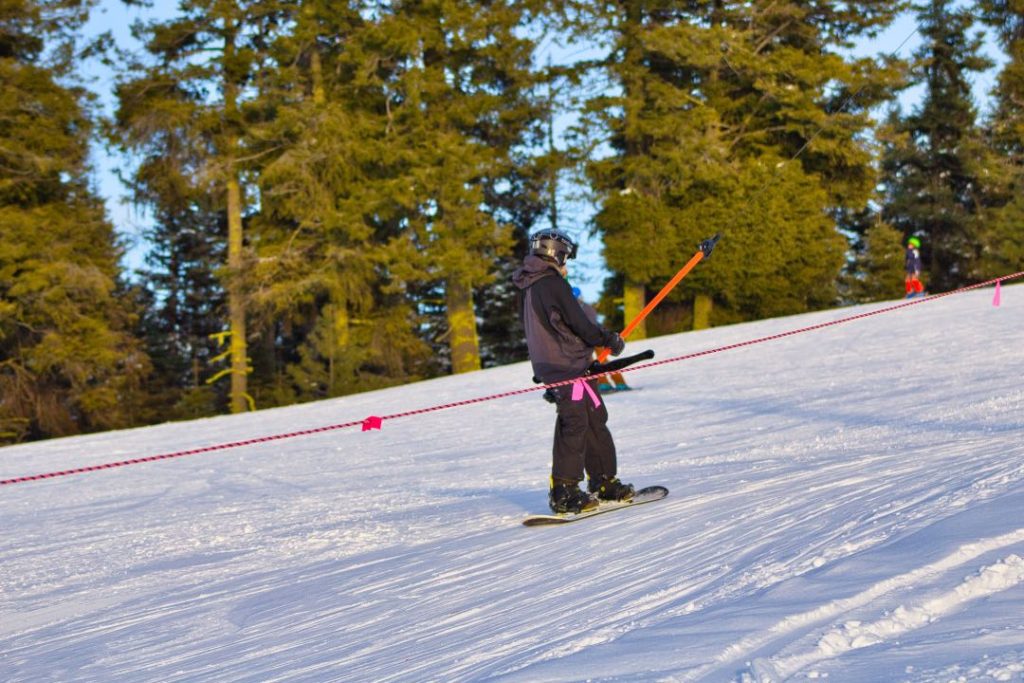
But even from the outside, it’s clear how its punk-rock ethos has rippled through the entire snowsports world. That influence shows up not only in the attitude but even in the gear and terrain tackled by skiers. These days, you’ll find skiers hitting the terrain parks just as hard as snowboarders.
So let’s dive in: explore snowboarding history, uncover some surprising details, talk about the Olympics, peek at where the sport is headed – and who knows, all these facts about snowboarding just might inspire you to grab a board and shred for yourself.
Table of Contents
Fun Facts about Snowboarding
Before we go too deep into the snowboarding mythos, let’s cover some fun snowboarding trivia.
1. Snowboarders have their own language.
“Shredding,” “bombing,” and “jibbing” are just a few of the colorful terms snowboarders use to describe descending a mountain in style. The sport’s distinctive lexicon draws heavily from surfing and skateboarding cultures, infused with a healthy dose of bravado.
As snowboarding gained widespread acceptance at ski resorts in the 1990s and the two communities began to overlap more in the 2000s, many of these words crossed over and became part of the broader skier vocabulary as well.
2. Snowboarding also has a distinctive fashion.
Picture a pro skier’s outfit. It’s likely tight-fitting, maybe even an aerodynamic race suit. It’s designed for speed, and it gives the wearer a posh look.
Snowboarders rejected that look from the start. Just like their distinctive slang, snowboarding fashion draws heavily from surfing, skateboarding, hip-hop, and punk subcultures, prioritizing attitude over efficiency.
Baggy pants, oversized jackets, and loose layers are the norm, giving boarders unrestricted movement for tricks and grabs and looking cool while doing it.
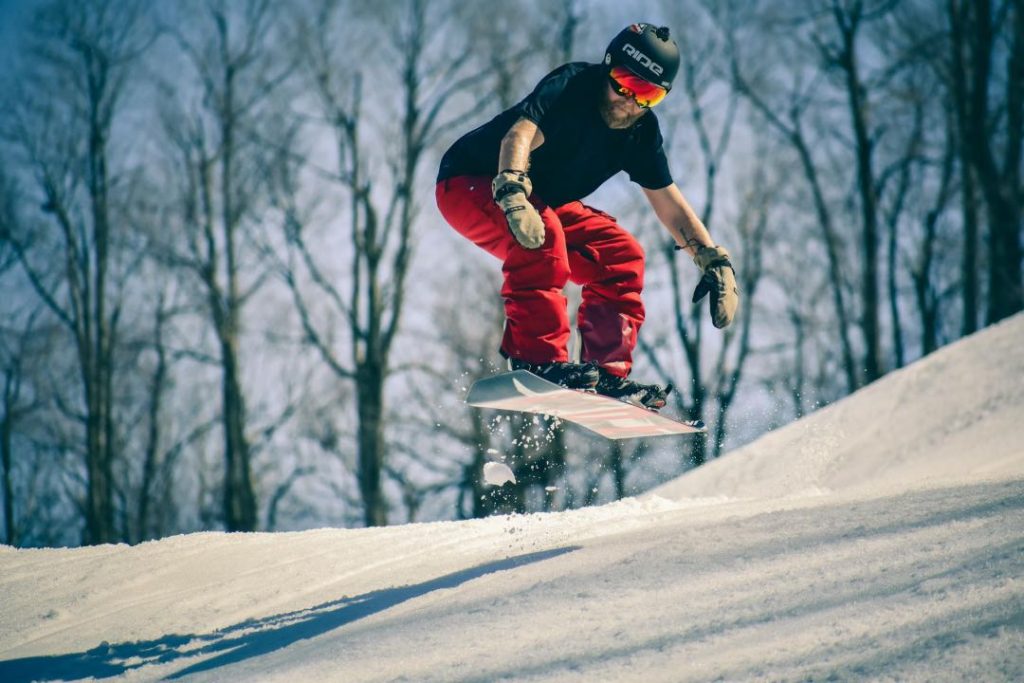
3. Snowboarders are either “regular” or “goofy.”
You’re probably familiar with handedness, but did you know there’s also “footedness”?
All of us have a dominant foot. It’s the one you’ll naturally use to kick a ball or push off with when jumping. To figure out which of your feet is dominant, have someone gently push you from behind. The foot you step forward with is your dominant one.
When snowboarding (and it’s the same in surfing), the dominant foot is the one at the front of your board. If that’s your left foot, you’re referred to as “regular.” If it’s your right, you’re “goofy,” because like left-handedness, right-footedness is less common. You’d think that would be stigmatizing, but it actually has a fun backstory.
4. Goofy stance gets its name from the Disney character.
The term “goofy” stance originated in surfing culture long before snowboarding came on to the scene. In the 1937 Mickey Mouse cartoon Hawaiian Holiday, Goofy tries surfing amid a series of hilarious wipeouts. In his most triumphant (but brief) ride, he successfully catches a wave and rides it with his right foot out front, before crashing headfirst into the sand.
5. You’re not beholden to regular or goofy.
One of the most important skills to learn as a snowboarder is how to ride “switch.” This means riding with your non-dominant foot forward. It feels awkward at first, you’re essentially riding backwards, and you’ll probably take a few tumbles while you get the hang of it. But learning to ride switch is essential for maintaining a balanced physique and pulling off certain tricks.
6. Shaun White is the biggest name in snowboarding.
The San Diego native, often referred to by his nickname “The Flying Tomato” (he’s a redhead), got his start in the skate parks of southern California. He even befriended skate legend Tony Hawk before transitioning to snow-covered halfpipes.
White’s won three gold medals, in the 2006, 2008, and 2018 Winter Olympics, and he has his own video game. He’s also penned some of the most prominent quotes about snowboarding.

7. 007 can shred.
Unsurprisingly, secret agent James Bond is an accomplished skier, appearing on the slopes in more than half a dozen of his nearly 30 films. By contrast, Bond has been shown snowboarding only once, and what is surprising, is that it was back in the mid-1980s.
In A View to a Kill, starring Roger Moore, Bond not only outmaneuvers the Soviets on his improvised board (made from a wrecked snowmobile), he pulls off a sweet pond skim while “California Girls” plays in the background.
Facts about the History of Snowboarding
Skiing has a long and storied history, going back thousands of years, and much of it is intertwined with transportation, hunting, and military traditions. Snowboarding history … is not that at all. Snowboarding has always been about the stoke.
8. The snowboard was invented in 1965… in Michigan.
In what must be one of the most unlikely snowboarding facts, the state known for Great Lakes and modest hills is where it all began. On Christmas Day in 1965, engineer Sherman Poppen, looking to entertain his daughter, bolted two children’s skis together to create a board you could stand on, which his wife dubbed the “Snurfer.”
Poppen then built a prototype board, which had no bindings – the rider just stood on it like on a sled. It was a cross between a sled and a monoski, with a rope attached to the nose for steering.
Marketed primarily as a novelty rather than actual sports equipment, nearly a million Snurfers were sold, but its features were not incorporated into what we see in snowboards today. That would take several more years and another brilliant mind…
9. The second generation of snowboards looked more like what we know today.
Sort of. A few years after the Snurfer became a commercial success, Cornell engineering student Dimitrije Milovich developed the “Winterstick,” launching it in 1972. Inspired by surfboards, it marked a significant step toward modern snowboarding.
Early Winterstick models featured some pretty sketchy bindings, just nylon straps with foam padding, but they gave riders more control than the sled-like Snurfer. Passionate about his creation, Milovich refined the design, incorporating features like metal edges and eventually a sidecut that enabled ski-like carving.
10. The first Warren Miller film to feature snowboarding was Ski a la Carte in 1978.
It wasn’t exactly “snowboarding,” though…
In the film, a rider “carves” their way down a snowy hill on a skateboard that has had the wheels replaced with two little sleds. Like a skateboard, the rider can control it by shifting their weight, but since the sleds lacked edges, it wasn’t capable of much more than the bunny hill. It was still a fun bit, and it showed how the sport could eventually evolve.
11. The International Snowboarding Federation was formed in 1989.
This organization served as the first governing body for snowboarding and set up the initial world championship competitions. It lasted only a few years before being absorbed by the long-standing International Ski Federation (FIS).
It was not until 2022 that the FIS adopted its more inclusive name, the International Ski and Snowboard Federation (though it retained the acronym FIS, and we all know which S is the one getting dropped).
12. Snowboarding has changed the way we ski.
Remember when skis were just ridiculously long, straight boards with pointy tips? I sure do, because I’ve still got a pair in my garage for rock skiing.
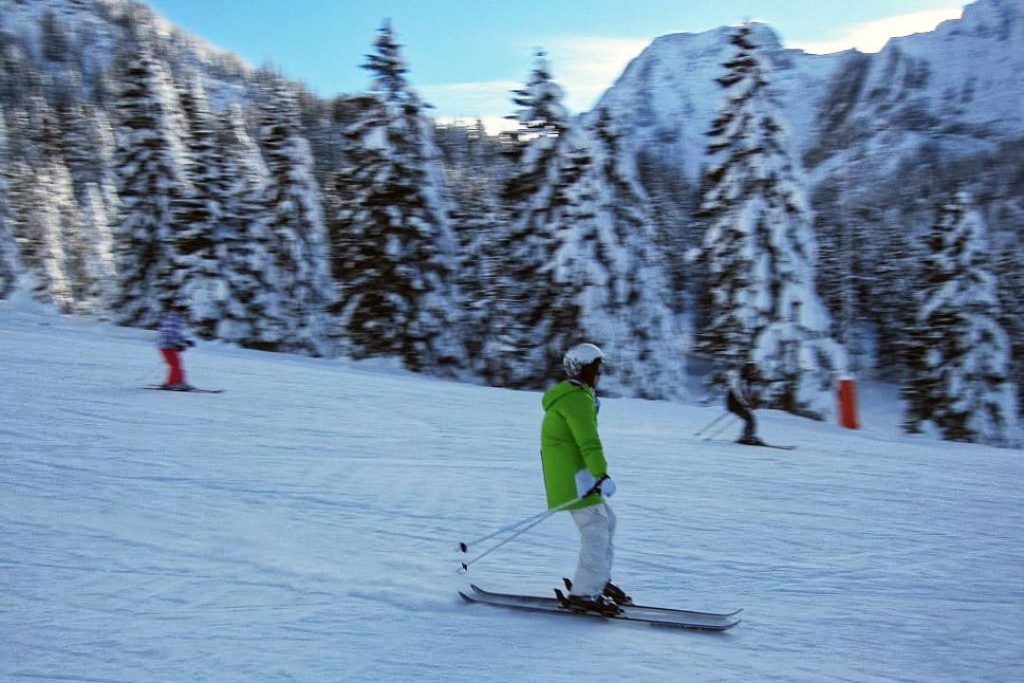
But by the late ’90s, skis were changing fast. New more parabolic-shaped skis started coming out, making carving effortless, and manufacturers also rounded both the tip and the tail. Why? Snowboarding.
These are snowboarding facts that not all skiers want to own up to. But skiers wanted to ride backwards and drop into the halfpipe like their cooler snowboarding friends – so much so that it completely changed how skis are manufactured.
Facts about Olympic Snowboarding
Snowboarding’s instant popularity has helped to modernize the Olympics, bringing everything we love about the X Games to the decidedly stuffier Olympic podium. Here are some fun facts about snowboarding in the Olympics that you should know before the 2026 Games in Milan-Cortina, Italy.
13. Snowboarding hit the Olympics in 1998.
Snowboarding made its official debut at the 1998 games in Nagano, Japan, with men’s and women’s events in the giant slalom and halfpipe.
Unlike most additions to the Olympic program, it was fast-tracked to a medal event without going the usual demonstration sport route first.
14. There are currently five types of snowboarding events in the Olympics.
That’s impressive for a sport that’s only been in the Games for 30 years! Each one has a men’s and a women’s competition, and snowboard cross also has a mixed-gender team event.
Here’s what you’ll be able to watch at the upcoming Winter Games:
- Halfpipe: Riders drop into a U-shaped bowl to launch off the walls and perform aerial tricks, which are scored on difficulty, variety, and execution.
- Slopestyle: Riders navigate a downhill course packed with rails, jumps, and other terrain park features, performing tricks along the way.
- Big Air: A single massive jump where riders launch for huge airtime, performing one trick per jump.
- Parallel Giant Slalom: A head-to-head race on twin slalom courses, with two riders descending side-by-side and navigating through gates, much like the giant slalom event in skiing.
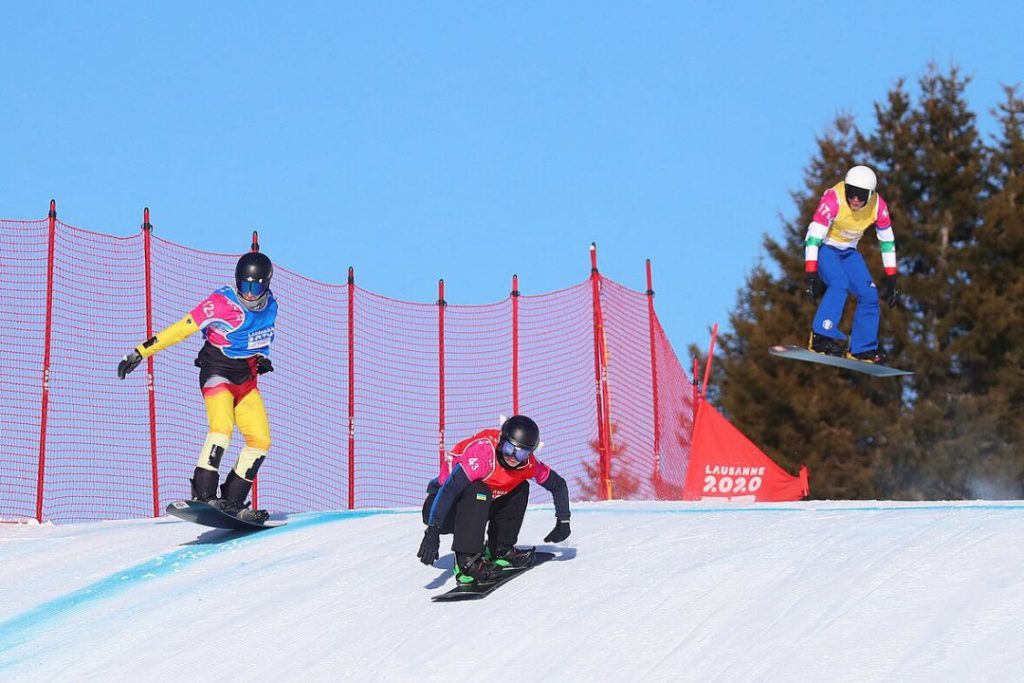
- Snowboard Cross: A chaotic race with up to six riders making their way down a narrow, obstacle-filled course featuring jumps, berms, and rollers – similar to motocross.
15. The first snowboarding Olympic gold medalist was immediately stripped of his title.
Canadian Ross Rebagliati claimed snowboarding’s very first Olympic gold in the men’s giant slalom at the Nagano games, only to have it taken away when he tested positive for marijuana.
At the time, cannabis wasn’t classified as a performance-enhancing drug by the Olympic Committee (though the International Ski Federation did consider it one), and I would probably call it more of a performance-limiting drug, to be honest. In any case, Rebagliati claimed the THC detected in his blood was from secondhand smoke. Upon appeal, his medal was reinstated.
Afterward, the Olympic Committee added marijuana to its banned substances list. Rebagliati also was put on the No-fly List, and due to his past drug use, was barred from entering the U.S. and competing in events like the X Games. The incident perfectly encapsulates the clash between snowboarding’s rebellious roots and the conservatism of Olympic sport.

16. The U.S. has absolutely dominated Olympic snowboarding.
With 35 total medals (out of the 150 awarded across the past seven Winter Games), 17 of them gold, America is the undisputed champion of shredding. The only snowboarding Olympic events the U.S. has never taken the gold in? Big Air and Parallel Giant Slalom (men’s or women’s).
The next most accomplished countries in Olympic snowboarding are Canada with 17 medals (five gold) and Switzerland with 14 medals (eight gold).
17. Medalists in snowboarding skew young.
The youngest-ever snowboarding gold medalist is American Red Gerard, who was just 18 years old when he won the slopestyle event in 2018. The average snowboard medalist is around 26, while the average downhill skiing gold medalist is around 30. Ski legend Lindsey Vonn will be 41 when she competes in her fifth Olympic Games in Italy this year.
The difference can largely be attributed to snowboarding being more focused on judged, aerial events, which skew much younger than timed events.
18. Snowboarding entered the Paralympic Games in 2014.
Adaptive snowboarding made its Paralympic debut at the Games in Sochi, Russia, with the introduction of men’s and women’s snowboard cross events for athletes with lower-limb impairments.
19. There are now three types of snowboarding events in the Paralympics.
In addition to the snowboard cross, the Paralympics now also features single and dual banked slalom events.
Paralympic snowboarders are separated by their impairment:
- Upper Limb: Impairment affecting one or both arms
- Lower Limb 1: Above-the-knee amputation or significant impairment
- Lower Limb 2: Below-the-knee amputation and less significant impairment
World Records in Snowboarding
If you’ve ever watched a Warren Miller film, you know boarders love to go big, even when it’s at the expense of their own body. These are some of the craziest records broken with a snowboard – and some of the most unbelievable snowboarding facts.
20. The snowboarding speed record was set all the way back in 1999.
Despite the relentless progression in snowboarding, with athletes going bigger every year, the speed record has been untouched in over 25 years. Australian Darren Powell reached a speed of 125.459 mph (201.907 km/h) at the Les Arcs resort in 1999.
For context, that’s roughly 30 mph slower than the current skiing speed record. To achieve it, Powell wore a ridiculous-looking bodysuit and helmet for aerodynamics and rode down a specially prepared, near-vertical ice track. Falling at any point in the attempt would have killed him.
Yet almost nobody knows his name, while halfpipe stars like Shaun White have earned tens of millions doing tricks that are far less risky. Perhaps it’s time to accept this as the terminal velocity for a snowboarder and let the record stand.
21. The world’s largest snowboard holds 27 riders.
Built by Swiss inventor Arnold Schindler and his team at Schindler & Scheibling AG, this massive snowboard holds the Guinness World Record for the largest snowboard. Measuring 32 feet long and seven feet wide, it took 200 hours to build.
The board was successfully ridden by 27 people down a slope at Flumserberg Resort in Switzerland in 2007. Resembling a giant sled more than a traditional snowboard, it is controlled by riders collectively shifting their weight.
22. The first ever 6.5-rotation jump was landed at the X-Games in 2025.
Japanese boarder Hiroto Ogiwara was the first boarder to ever land a 2340 mute grab, involving 6.5 mid-air spins while grabbing the edge of the board. The sport is always progressing though, so there’s a good chance a 2520 mute grab will be coming before too long.
23. The longest rail slide ever completed was almost a football field long.
In 2015, German boarder Basti Rittig set the record for world’s longest rail slide on a snowboard, 259 feet, at Dachstein Glacier in Austria.
Though Rittig’s record still stands, he was somewhat overshadowed by Swedish skier Jesper Tjäde, who pulled off a 500-foot slide on skis in 2022 (after 127 tries!).
Facts about Snowboarding at Resorts
Ski resorts have not always been friendly to boarders, and it took a decade or more for the sport to really go mainstream. These are a few of the more interesting pieces of trivia about snowboarding’s history at ski resorts.
24. Vermont’s Stratton Mountain was the first to open itself to snowboarders.
In 1983, Stratton Mountain became the world’s first ski resort to officially endorse snowboarding by offering lessons. Their openness to boarding is largely attributable to Jake Burton, founder of Vermont-based Burton Snowboards, who built some of the first commercially viable boards in his garage and persuaded Stratton Mountain’s managers to let him try them out on their slopes.
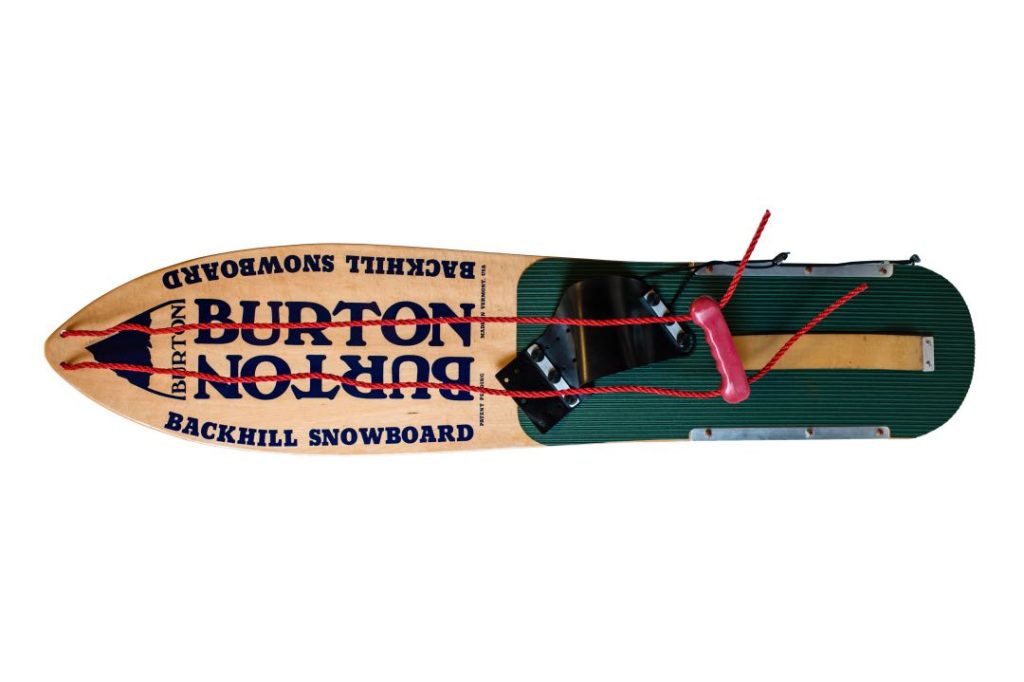
25. A few resorts held snowboarding competitions before it went mainstream.
Jake Burton had already competed in a few competitions prior to Stratton Mountain opening to the masses, including Snurfer competitions in Michigan and the 1981 King of the Mountain event at Ski Cooper in Colorado.
But the first properly organized, board-only race took place at Suicide Six in 1982 near Woodstock, Vermont (the Green Mountain State is truly the birthplace of boarding), the year before Stratton started permitting snowboarders.
26. Three U.S. ski resorts still ban snowboarding.
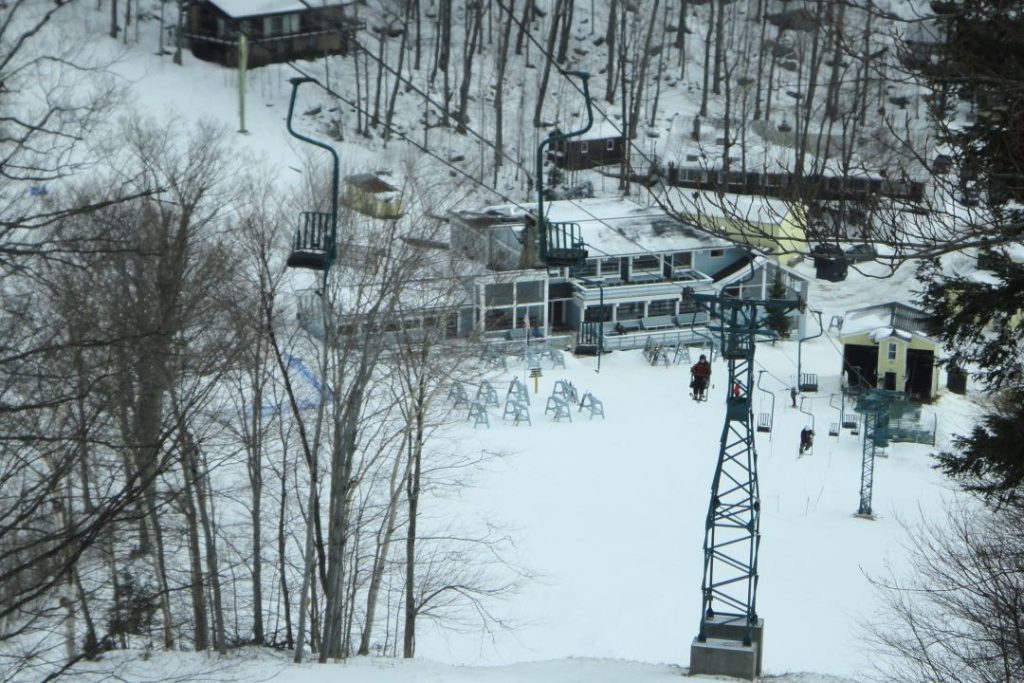
The old skier-snowboarder rivalry lives on at a handful of hills: Deer Valley and Alta in Utah, plus Mad River Glen in Vermont (home to one of the last two single chairs in America!). These are the only three ski areas in North America that outright ban snowboarding.
Ironically, Burton Snowboards is headquartered just down the road from Mad River in Burlington, Vermont. Back in the mid ‘00s, the company ran the “Poach the Line” contest, offering cash prizes for the best videos of riders sneaking runs at the banned resorts.
Mad River took it in good spirits, embracing the free publicity and seeing it as a nod to the “dirtbag” ethos that the hill embodies.
27. There have been attempts at snowboard-only hills.
In 1993, Raging Buffalo Snowboard Park outside of Chicago was created in response to the ski hills that were banning snowboarders. The vertical drop was only 150 feet, so nothing for the skiers to get too excited about it anyways, and boarders appreciated the terrain park features built on the diminutive slope.
28. Snowboarders can hit the backcountry, too.
Backcountry skiing and snowboarding have exploded over the past 25 years, driven by the allure of endless untouched powder with no lift lines and no expensive tickets.
What started as a small group of dedicated skiers has grown dramatically, with a nearly ten-fold increase in the past few decades. Snowboarders were quick to join the party, but how to get up the hill with two feet locked onto the board?
That’s where the splitboard came in: a snowboard that splits down the middle, transforming it into a pair of touring skis (complete with climbing skins) for uphill travel. Once you reach the top, clip the halves back together and shred down the mountain.
Difficult Facts about Snowboarding
Fun and exciting as it is, not all is well in the world of snowboarding, however. These are some things to know about the more negative aspects of the sport.
29. Snowboarders were initially despised by skiers.
In 1985, only seven percent of North American resorts were letting snowboarders in. It was believed that they’d plow away the powder – but if we’re being honest, it was often more about keeping the riff raff out.
Snowboarders were looked down on by the more elitist skiing community, for their language, fashion, attitude, and lower social class.
30. Skiers still far outnumber snowboarders.
Only 30-35 percent of resort visitors in the U.S. (and far less abroad) are riding snowboards. The good news is that the sport is more popular among millennials and Gen Z, which means that, over time, the balance could shift in snowboarding’s favor.
31. Snowboarding has also seen a drop in popularity.
Snowboarding’s popularity has declined significantly since its peak in the mid-’00s. Today, there are 35-40 percent fewer snowboarders on the slopes. Skiing has seen a similar drop, with about 25-30 percent fewer skiers than 20 years ago.
Several factors explain the fall in snowboarding:
- Rising costs of gear, lift tickets, and travel have priced out many lower-income visitors.
- Climate change is rapidly reducing the number of good snow days.
- The ski industry has adopted some of the best parts of snowboarding, building skis with twin-tips that hang just as well as the boards in halfpipes and on rails.
32. Lifts are just not made for snowboarders.
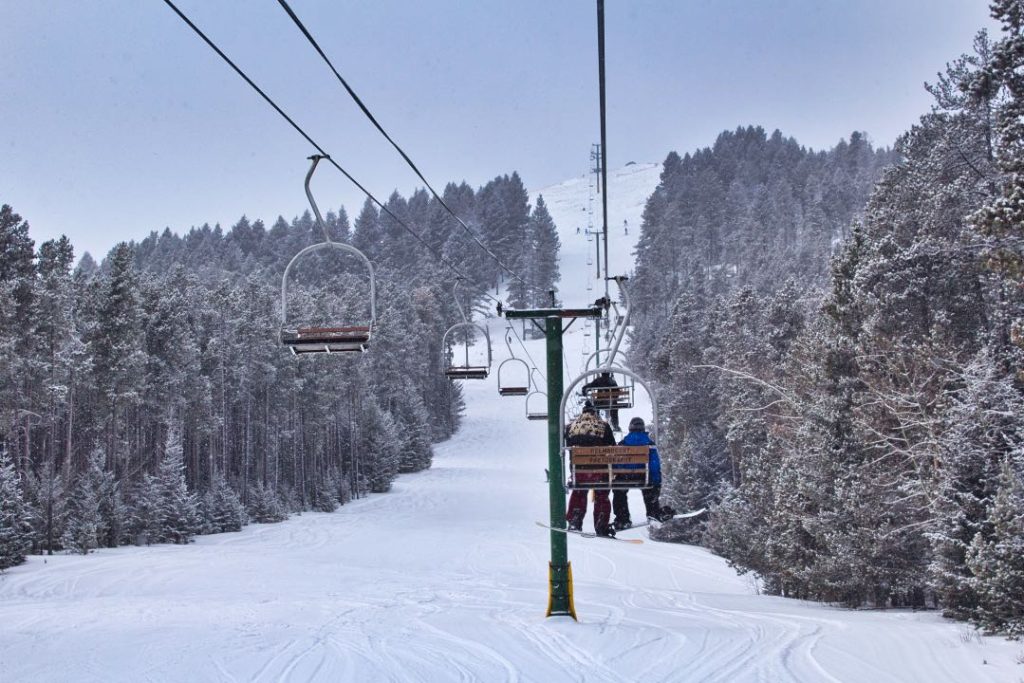
Whether it’s chairlifts, T-bars, or even magic carpets, lifts were never designed with snowboarding in mind. To board them, snowboarders must unstrap their back foot, allowing them to push off like on a skateboard. Then, upon dismounting at the top, they have to ride one-footed to a flat area before strapping back in.
In over 50 years of snowboarding innovation, no one has devised a practical solution to this longstanding inconvenience.
33. Snowboarding has significantly more injuries than skiing.
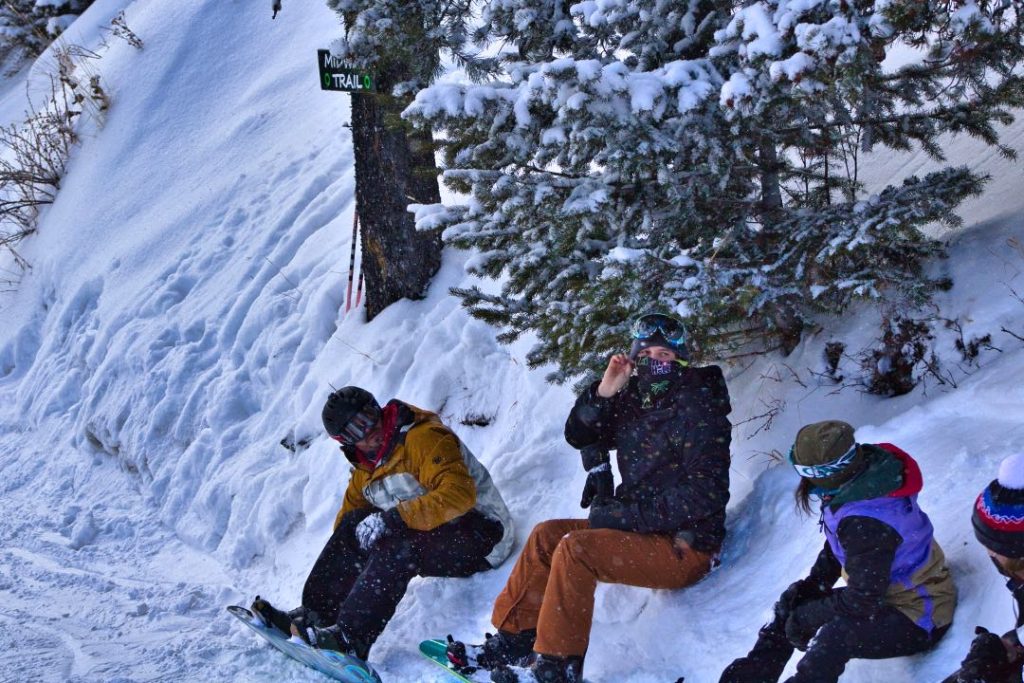
Snowboarders are more at risk for injuries than skiers, with studies from the National Ski Areas Association showing 3.9 injuries per 1,000 snowboarder visits, compared to 2.5 per 1,000 skier visits. That makes snowboarding around 50-70 percent more dangerous than skiing.
What makes it more dangerous?
- Both your feet are strapped to snowboard, limiting control that could prevent a fall.
- The sport attracts a younger crowd that’s more prone to risk-taking.
- Boarders spend more in the terrain parks, where falls are almost guaranteed.
34. Most boarding injuries are to the wrists and arms.
Skiers often suffer twisted knees in major crashes when their bindings fail to release. Snowboarders, by contrast, are protected from such injuries since both feet are fixed to a single board.
Instead, snowboarders most commonly injure their wrists and arms, which they instinctively extend to break a fall during a faceplant. Neither type of injury is pleasant, but ski technology at least attempts to mitigate the risk to skiers through releasable bindings. Not a lot can be done about snowboarders’ tendency to fall forward.

35. Snowboarders also get a lot of tailbone injuries.
Wrists get bent during a faceplant, but what about when boarders fall backwards? The tailbone takes the brunt of the impact and as any one-season snowboarder can tell you, it’s unpleasant. Some boarders wear padding shorts to soften the blow.
And that’s it – more information about snowboarding than you could possibly have wanted or needed! I hope you’ve learned something interesting and maybe gotten inspired to trade your skis in for a board this season (or maybe just for a day).
Do you know of any other snowboarding fun facts? Share them in the comments!
PIN IT!

 Glacier National Park in Winter: Montana’s Best-Kept Secret